15 Feb 2013

Thief dies from Methanol poisoning.

Court Bulletin

Brewers Retail Inc. Fined $175,000 After Worker Killed

February 15, 2013
Brampton, ON - Brewers Retail Inc., a Mississauga company that owns and operates beer stores in Ontario, was fined $175,000 for a violation of the Occupational Health and Safety Act after a worker was killed.
On April 8, 2012, two workers were washing the exteriors of trucks and trailers at The Beer Store Distribution Centre located at 69 First Gulf Boulevard in Brampton. That afternoon, one of the workers found a liquor bottle filled with blue liquid. The bottle contained methanol windshield washer fluid used in the trucks, however it still had the liquor label on it. The two workers both drank from the bottle, and one took the bottle home and finished it. That worker later died from methanol poisoning.
Brewers Retail Inc. pleaded guilty to failing to acquaint a worker with a hazard in the handling, storage or use of a liquid chemical agent
The fine was imposed by Justice of the Peace Lisa Ritchie. In addition to the fine, the court imposed a 25-per-cent victim fine surcharge, as required by the Provincial Offences Act. The surcharge is credited to a special provincial government fund to assist victims of crime.


Court Information at a Glance
Location:                    Ontario Court of Justice
                                    5 Ray Lawson Blvd
                                    Brampton, ON
Judge:                         Justice of the Peace Lisa Ritchie
                                   
Date of Sentencing:   February 12, 2013
Defendant:                 Brewers Retail Inc.
Matter:                       Occupational Health and Safety
Conviction:                Occupational Health and Safety Act, Section 25(2)(d)
Crown Counsel:        Jennifer Malabar

13 Feb 2013

Dr.J.PARIAG MD(Univ.West Indies-Jamaica & Trinidad) FRCSC(McMaster-Hamilton)

Dr. John K. Pariag, Mississauga. On March 22, 2012, the Discipline Committee found that Dr. Pariag committed an act of professional misconduct, in that he failed to maintain the standard of practice of the profession. The Committee also found that Dr. Pariag is incompetent. Dr. Pariag admitted to the allegations of professional misconduct and incompetence, as follows:
Regarding a review of 35 patient charts from his surgical practice:
  • improper placement of chest tubes in a CF patient;
  • performing cholecystectomy in the presence of evidence that the common bile duct was not clear;
  • failure to protect an anastomosis with a stoma where appropriate;
  • improperly discharging three post-surgical patients with elevated white blood cell counts and fevers;
  • unnecessary transfusion of one patient;
  • questionable decision to perform a targeted bowel resection in a patient with rectal blood loss when the point of bleeding was unknown, and failure to investigate a possible foreign body as indicated by x-rays of the patient;
  • incorrectly repairing a hernia, leading to recurrence;
  • unnecessary removal of three healthy appendices;
  • failure to obtain a right breast ultrasound despite a radiologist's suggestion in a cancer patient;
  • failed to give DVT [deep vein thrombosis] prohylaxis perioperatively to a patient with known breast cancer;
  • failure to properly control intraoperative bleeding;
  • improperly performing surgery without first addressing the patient's elevated INR;
  • perforating a patient's bowel while removing two 0.25 cm polyps;
  • improperly ordering blood transfusion of a 12-year-old with a haemoglobin count of 108, which order was subsequently cancelled by another physician, and failure to investigate percutaneous pelvic abscess drainage before proceeding to perform a laparotomy on that patient;
  • improperly performing an elective thyroidectomy without supervision when Dr. Pariag had never performed such a procedure at the hospital and had not reviewed thyroid surgery during his residency; and
  • dissecting a patient's portal triad during surgery to correct a bowel obstruction, which error resulted in the patient's death due to hemorrhagic shock.
Regarding patient A, who had surgeries for an intra-abdominal mass, later identified as a sarcoma:
  • failed to adequately document a differential diagnosis, treatment plan, or informed consent discussions with Patient A; and,
  • after the recurrence of the sarcoma, failed to solicit an opinion from the Regional Cancer Centre where the patient had been seen in the past, and improperly attempted to treat the sarcoma outside a multi-disciplinary care center.
On December 19, 2012, the Discipline Committee ordered a public reprimand, and directed that specified terms, conditions and limitations be imposed on Dr. Pariag's certificate of registration for an indefinite period of time, including that:
  1. Dr. Pariag is prohibited from engaging in any hospital-based surgical practice save and except as a surgical assistant when a College-approved certified surgeon is performing the surgery and is in attendance. At no time shall Dr. Pariag be the most responsible physician with respect to any patient in a hospital setting;
  2. Dr. Pariag is prohibited from performing surgery in an office-based setting save and except for minor surgical procedures under local anaesthetic involving the skin and subcutaneous tissues;
  3. At his own expense, Dr. Pariag shall undergo a comprehensive practice assessment (CPA) of the office-based practice described in paragraph (b) by an assessor selected by the College. Dr. Pariag shall abide by any and all recommendations made as result of the CPA; and Dr. Pariag shall promptly notify the College should he cease practising medicine before completion of the CPA.
  4. The terms, conditions and limitations on Dr. Pariag's certificate of registration under (a) and (b) are to be included on a written form and the written form is to be presented to any patient before Dr. Pariag sees the patient, and a copy signed by the patient is to be included in the patient's chart.
Dr. Pariag was further ordered to pay to the College costs in the amount of $3,650.

10 Feb 2013

USA Cancer clinics in TORONTO

CLEVELAND CLINIC CANADA
181 BAY STREET. (BROOKFIELD PLACE-ALSO YONGE ST ENTRANCE)
416 507 6600
(30,000 SQ.FT.)

The cost to receive an online medical second opinion is $565.00. If a pathology review (reading) is required to complete your online medical second opinion (as is the case in most cancer-related diagnoses), there will be an additional charge of $180.00 for that review for a total cost of $745.00 for the second opinion and the reading.


MD ANDERSON CANCER CLINIC
438 UNIVERSITY AVENUE ( South of Dundas)
416 599 0450

AVOIDS LENGTHY DELAYS.BY OHIP-REQUIRED GP REFERRALS to LOCAL SPECIALISTS

Toronto Princess Margaret (Cancer ) Hospital  gets lots of donor money for research. Clinical care at Welfare level.. 4-hour wait for 15 min visit.


8 Feb 2013

Dr.Charles HANDY: founder of London Business School

Charles Handy - organizational and social development guru, Motivation Calculus theory, and modern ideas about work, fulfilment, globalization and life purpose

Charles Handy is regarded by many as the most advanced management thinker in the world. His early work, such as his 'Motivation Calculus' outlined below, has been steadily surpassed and extended by his more recent modern and sophisticated thinking about the purpose of work, business and organizations.
Handy was born in 1932 and is popularly regarded as Britain's greatest management visionary. He graduated from Oxford and worked for Shell International, and during two years at the Sloan School of Management became a protégé of Warren Bennis, the organizational and leadership guru.
Handy's first book, Understanding Organisations (1976, revised 1991) is well regarded. Gods Of Management (1978), is another highly regarded work, in which Handy uses a metaphor of the Greek Gods to explain different organizational cultures:
  • Zeus (power, patriarchy, 'the club' culture)
  • Apollo (order, reason, bureaucracy, the 'rôle' culture)
  • Athena (expertise, wisdom, meritocracy, 'task' culture)
  • Dionysus (individualism, professionalism, non-corporate, existentialist culture)
In the 1980's Charles Handy developed his thinking and writing on modern living and working in The Future Of Work (1984) and The Age Of Unreason (1989), which pioneered new ideas about the value of knowledge and self-determination.
Handy was one of the first to identify that 'careers for life' were destined to become a thing of the past, and as a thinker Handy seems able to predict trends and changes on a global and fundamental scale. He is visionary, rather than an analyst, and sees huge, 'big pictures' and trends, rather than small effects and details.
His book, The Making Of Managers (1988), jointly written with John Constable, criticised and advocated radical improvements to UK management standards, which gave rise to the Management Charter Initiative.
In the 1990's and 2000's Charles Handy increasingly focused on ethical and philosophical issues for business and society, as reflected in Inside Organisations (1990) and in his collection of observations, Waiting For The Mountain To Move (1991).
The Hungry Spirit (1997) can be seen to predict the zeitgeist of the early 2000's in which increasing numbers of people and leaders seek more fulfilling solutions to organizational purpose, against a background of globalization imbalances and conflicts affecting humankind, resulting from decades of corporate and individual greed enabled by unfettered free-market economics.
Later books include The Empty Raincoat: Making Sense of the Future (1994), and The New Alchemists: How Visionary People Make Something out of Nothing (1999), which further demonstrate Handy's capability and reputation as one of the great modern organisational commentators, and someone who sees far beyond the world of business.
Charles Handy's works are generally philsophical and insightful, rather than stacked with modular theories and diagrams, and as such will tend to appeal to intuitive humanitarian thinkers perhaps more than structured process-oriented types.
Here is a rare example of a Handy 'model' from his earlier writings, included especially because it illustrates his focus on the human individual perspective.

charles handy - motivation calculus

Charles Handy's Motivation Calculus is an extension of Maslow's Hierarchy of Needs, and an example of Handy's early clarity and interpretation of the human condistion and response to work.
The simple model addresses cognitive and external reference points in a way that Maslow's original Hierarchy of Needs five-level model of does not. Handy's Motivation Calculus attempts to cater for complexities and variations in people's situations beyond the reach of the original Hierarchy of Needs model. Briefly this is Handy's Motivation Calculus, which implies that our motivation is driven by a more complex series of needs than 'needs' alone, that is, our own interpretations and assessments form additional layers determining and determined by our response to our own needs and the effects of those responses:
Needs - Maslow Hierarchy of Needs factors, personality characteristics, current work environment, outside pressures and influences.
Results - we must be able to measure the effect of what our additional efforts, resulting from motivation, will produce.
Effectiveness - we decide whether the results we have achieved meet the needs that we feel.

PORTFOLIO CAREERS: risk management

Portfolio Careers:
Creating a Career of Multiple Part-Time Jobs


by Randall S. Hansen, Ph.D.
Is it the career of the future or a passing fad? Will workers and employers in the U.S. embrace the concept as strongly as in Europe? Is it right for you?
The "it" is a portfolio career, in which instead of working a traditional full-time job, you work multiple part-time jobs (including part-time employment, temporary jobs, freelancing, and self-employment) with different employers that when combined are the equivalent of a full-time position. Portfolio careers offer more flexibility, variety, and freedom, but also require organizational skills as well as risk tolerance.

Portfolio careers are usually built around a collection of skills and interests, though the only consistent theme is one of career self-management. With a portfolio career you no longer have one job, one employer, but multiple jobs and employers within one or more professions.


Most experts attribute the concept of portfolio careers to management guru Charles Handy, who in the early 1990s predicted that workers will be more actively in control of their careers by working lots of small jobs instead of one big one.
And in his book, Job Shift: How to Prosper in a Workplace Without Jobs, William Bridges states that the lack of job security in today's workplace means that we are all temporary workers and that "all jobs in today's economy are temporary." And most other experts agree that the time is right for a rapid increase in portfolio careers -- especially among baby boomers searching for more challenges at the end of traditional careers.
An example of a person with a portfolio career is an accountant who works two days a week with one employer, teaches part-time at a local college, and has a consulting or tax practice on the side. But the jobs don't all have to use the same skills. For example, the accountant might also be an avid collector who spends two days a week selling his wares at the flea market. Or perhaps he/she serves on one or two corporate or advisory boards.
The reasons for considering a portfolio career are many. Some do it seeking a better work/life balance. Some do it for the variety and use of multiple skill sets. Some do it for the autonomy so that they -- rather than some corporate employer -- control their fate. Some do it to gain freedom form corporate agendas and politics. Some do it to follow multiple passions or for personal growth and fulfillment. Some do it for the pace and constant change. And some do it as a second career after retiring early from full-time employment, seeking new challenges and greater fulfillment.
But establishing and managing a portfolio career is not easy for many. Deciding on the types of jobs to seek, finding employers willing to hire, balancing competing demands for time, and managing the effort are key drawbacks mentioned. There's also the loss of benefits, possible drop in earnings, higher levels of uncertainty, lack of a regular routine, and feelings of isolation.
In one study of portfolio careerists (conducted by exec-appointments.com) -- executives who had left employers and gone into early retirement -- the majority, about two-thirds, reported they were very satisfied or satisfied with their success in establishing a portfolio career. The most rewarding aspects of a portfolio career were the ability to control own activities (27 percent), variety and unpredictability (21 percent), and freedom from corporate politics (19 percent). The biggest drawbacks include: difficulty in finding suitable roles (32 percent), uncertainty (25 percent), and constant need to network (21 percent). And not surprisingly, the two most important elements to their success were networking (57 percent) and self-marketing (20 percent).

7 Feb 2013

PRIVATE MEDICINE in SWEDEN

From the UK GUARDIAN

The UK centre right has looked on enviously as Sweden has privatised much of its health service in recent years
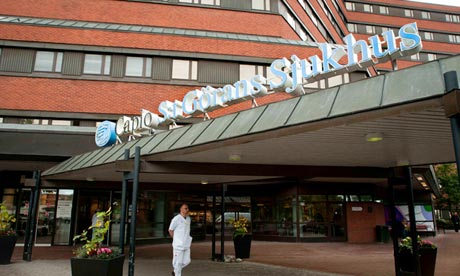
St Göran hospital in Stockholm
St Göran in Stockholm is Sweden's largest privately run hospital. Photograph: Rob Schoenbaum
On Kungsholmen, one of the islands on which the Swedish capital Stockholm is built, stands what some consider to be the future of National Health Service under David Cameron: St Göran, a six-storey redbrick hospital that makes profits from the state by treating patients.
Emblazoned with the name of its corporate manager, Capio – rather than the Swedish state, which constructed it – the hospital has for a decade been the mascot of pro-market Scandinavian policies that are widely admired by the coalition in Westminster.
Despite its reputation as a leftwing utopia, Sweden is now a laboratory for rightwing radicalism. Over the past 15 years a coalition of liberals and conservatives has brought in for-profit free schools in education, has sliced welfare to pay off the deficit and has privatised large parts of the health service.
Their success is envied by the centre right in Britain. Despite predictions of doom, Sweden's economy continues to grow and its pro-business coalition has remained in power since 2006. The last election was the first time since the war that a centre-right government had been re-elected after serving a full term.
As the state has been shrunk, the private sector has moved in. Göran Dahlgren, a former head civil servant at the Swedish department of health and a visiting professor at the University of Liverpool, says that "almost all welfare services are now owned by private equity firms".
Thanks in part to the outsourcing of the state, Sweden's private equity industry has grown into the largest in Europe relative to the size of its economy, with deals worth almost £3bn agreed last year. The key to this takeover was allowing private firms to enter the healthcare market, introducing competition into what had been one of the world's most "socialised" medical systems.
Business-backed medical chains have sprung up: patients can see a GP in a centre owned by Capio, be sent to a physician in the community employed by Capio, and if their medical condition is serious enough end up being treated by a consultant in a hospital bed in St Göran, run by Capio. For every visit Capio, owned by venture capitalists based in London and Stockholm, is paid with Swedish taxpayers' cash.
The company's Swedish operation now has 4,500 employees, with a turnover of about £500m. Westminster wonks have monitored Capio's success closely ever since St Göran was allowed to be taken over in 2000. There are now six private hospitals funded by the taxpayer in Sweden, about 8% of the total.
In Britain the coalition has mimicked this approach. Circle, backed by private equity firms, runs Hinchingbrooke hospital in Cambridge. Serco, a FTSE 100 company, is eyeing the George Eliot hospital in Nuneaton, and two hospitals may be privatised in south London as a result of bankruptcy.
Dahlgren says: "The difference between Sweden and England is that privatisation of a hospital was only considered when you had big financial problems. St Göran was considered one of the best when it was sold."
Capio's executives dispute that they have simply "made the best better". They say they focus on improving standards, arguing that only by attracting more patients and managing costs can they make money from healthcare.
During an hour-long presentation to the Guardian, St Göran's chief executive, Britta Wallgren, says the 310-bed hospital, serving 430,000 people, outperforms state-owned rivals inside and outside the country.
She says emergency patients see a doctor within half an hour, compared with A&E waits of up to four hours in the NHS. "We took an A&E department that dealt with 35,000 patients a year and now treats 75,000," Wallgren says. "As admissions grow and we have an increasingly elderly population so must our performance improve."
Capio stresses that St Göran has low levels of hospital-acquired infections, and patient surveys record high levels of public satisfaction. It has also produced year-on-year productivity gains – something the state cannot match. Thomas Berglund, Capio's president, says the "profit motive works in healthcare" and companies run on "capitalism, not altruism".
He adds: "We have just won the right to run the hospital again and will have to reduce costs by 120m Swedish krona [£11.2m] over 10 years. That's our profit gone unless we keep reducing costs here."
At the busy entrance to the hospital, Swedish patients appear resigned to the end of state ownership in health, once a cornerstone of the country's generous welfare system.
"I am one of those Swedes who do not agree that private hospitals should exist," says Christina Rigert, 62, who used to work as an administrator in the hospital but resigned "on principle" when it was privatised a decade ago.
Now back as a patient after gastric band surgery, she says: "The experience was very good. I had no complaints. There's less waiting than other hospitals. I still do not think there should be private hospitals in Sweden but it's happening."
Since 2010 private companies have had the right to set up large GP-style services anywhere in the country – and to be paid for it out of taxpayers' money. Corporates have set up 200 healthcare centres in two years, although critics point out that the majority have been in wealthier urban areas.
Dahlgren says that inequalities are growing, adding that the law is "fundamentally antidemocratic". Sweden, he explains, has a long history of local governments deciding where GPs should be sited to ensure poor or rural areas do not lose out.
"The local councils can now neither determine the number of for-profit providers to be financed by taxes nor where these tax-financed services are to be located," he says. "This is determined by the private providers on the basis of profitability rather than the health need for these tax-financed services. It is remarkably antidemocratic."
There are distinct differences between Sweden and Britain. Swedish political culture is much more consensual than in Britain, and strongly centred on people choosing where to get healthcare.
Leftwing governments in Sweden, who ran the country for 65 of the last 80 years, promoted patient choice between state-owned hospitals. The real shock was when centre-right governments argued in the 1990s that for patient choice to work, competition and privatisation in healthcare were needed.
The Social Democrats, the main Swedish opposition party, have given up the idea of renationalising the health service and instead argue that profits should be capped and quality of care more tightly regulated. With hardline opposition to private healthcare limited to the far-left parties, Swedes are likely to see more changes.
In Stockholm, more than 500 beds are being removed from the country's best known health centre, the Karolinska University hospital, and the services are being moved into the community to be run by private companies, a policy that in England would almost certainly lead to demonstrations.
Pro-marketeers argue that companies can improve patient experience at a reduced cost, and expand provision at a time when the state cannot afford to do so. This view was challenged last year when a business-backed research institute, the Centre for Business and Policy Studies, looked at the privatisation of public services in Sweden and concluded that the policy had made no difference to the services' productivity. The academic author of the report, who stood by the findings, resigned after a public row.
There have also been scandals involving claims of shocking treatment of some patients. Last year Stockholm county council, which controls healthcare for a fifth of the Swedish population, withdrew contracts from a private company after staff in a hospital were allegedly told to weigh elderly patients' incontinence pants to see if they were full or could be used for longer.
Stig Nyman, a Christian Democrat member of the council instrumental in ushering in a pro-market health policy for 20 years, says he still believes private business is necessary.
Over coffee and biscuits in his modern office amid the 19th-century neoclassical columns of the council building, Nyman dismisses the allegations of mistreatment. "We have hundreds of contracts with private firms. In this case journalists found five or six mistakes. It's not a big deal.
"In healthcare, companies drive up standards. We pay 5,000 Swedish krona [£465] a patient on average. We force people to compete on the quality of service and treatment."
Perhaps most damaging for private investors drawn by the potential profits to be made from the state has been the probing of their affairs by tax inspectors. The industry has been under scrutiny since 2007, when a spate of high-profile deals, including the buyout of Capio, led to investigations into financiers.
The charge is that private equity firms siphon profits out of the state's coffers while avoiding their fair share of taxes. Berglund, of Capio, says: "It is always thrown about that we are not paying taxes but it is not true."
Swedish tax authorities are, however, taking some companies to court because pay in private equity groups is often linked to the profits made on deals and has been incorrectly taxed for years, it is said, at rates lower than that required for income in Sweden.
Earlier this month one of Capio's owners, a private equity firm called Nordic Capital, lost a court case against the Swedish tax agency, leaving it with a bill of 672m Swedish krona [£63m]. The authorities, it is reported, will also slap a tax bill collectively of 2.6bn krona on another 34 individuals.
"There has been a strong reaction in Sweden. These people have been paying themselves enormous sums of money," says Dahlgren. "It should be a worry for every health system where you have competition and private firms arriving."

27 Jan 2013

CLINICAL EFFICIENCY v. RESEARCH.

from the BLOGGER.

Clinical research is valuable for the future.It provides glory, grant cash, personal perks and free trips to International conferences.

For the patient it is important to know whether one is an experimental Homo sapiens in a Trial

The patient wants BESPOKE medicine. Perfectly fitted to personal measurements.

This causes a conflict of interest especially in hospitals were docs are on salary and also where tenure depends on publication.

The best for a patient is a PRIVATE hospital whose function is not research but investigation and treatment.,
e.g King Edward VII--Sister Agnes in London, the UK Royal family's favorite, Or the PRIVATE section of a Teaching hospital.,e.g. Lindo wing of St Mary's ,Paddington.

The ideal is a SWISS hospital;clean, efficient, precise, and safe.

The USA Rochester Mayo is well-meaning but lacks investigational clinical precision
The laboratory postal service is excellent.

Toronto Princess Margaret hospital which houses the Ontario Cancer Research Institute attracts lots of Donor money for  furniture and fittings. Clinic organisation is pre-computer age. Important appointments overlap. Waiting time is in hours as appointments are block booked. There is no private wing. For the self-employed, visits are expensive as a full half-day must be allotted for a  15 min. visit.

More time efficient & comfortable is to travel by train or plane ( Toronto island airport ) to a PRIVATE hospital in Montreal e.g. ROCKLAND MD.

.

's.